


Formula E: Everything You Need To Know

FORMULA E: RACING FOR A CLEANER FUTURE, FASTER
With just two races to go, the Formula E championship is incredibly tight. But what is Formula E, you may ask? We have a handy guide!

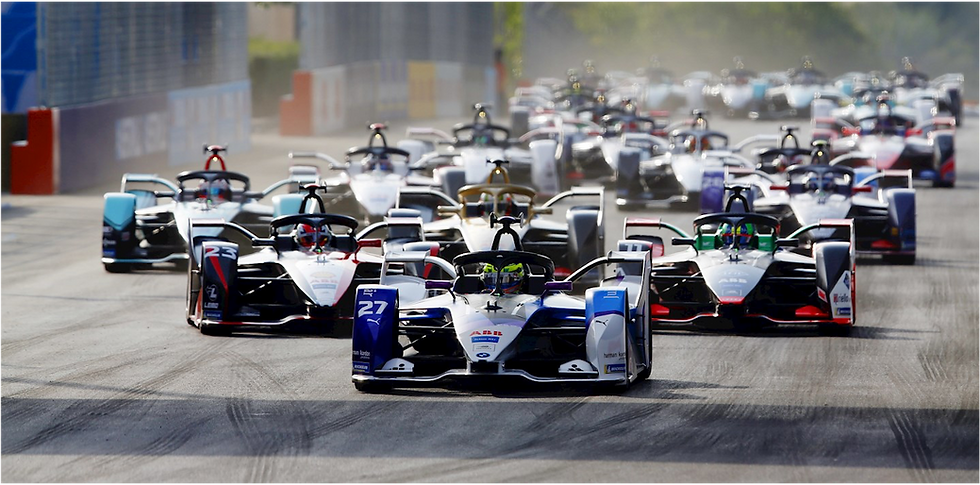
Formula E is a single-seater motorsports championship that uses electric cars. It was started in 2014, with the aim of driving on the streets of some of the most famous cities in the world. Its focus is to show how sustainability could find a place in motorsport, with the championship only travelling to densely populated cities that are actively trying to fight climate change.
How Does The Race/ Race Weekend Work?
All track action takes place on one day to try and reduce the disruption to the city. However, track dependent, there is usually Shakedown on the Friday, where the drivers test the electronics and reliability of the car at reduced speeds.
There are two practice sessions on the day. The first one is 45 minutes and the second 30 minutes. At a doubleheader weekend (where there are two races across the weekend) there is no 30-minute practice on the second day.
This is followed by qualifying and a Super Pole shoot out. The qualification session lasts an hour and the drivers are split into 4 groups to set times. The 6 drivers with the fastest time then go into a Super Pole shoot out, where they go out 1 by one, with the fastest lap being awarded an additional 3 points, taking the Julius Baer Pole Position.
The E-Prix then takes place after this. This lasts 45 minutes + 1 lap. Due to the electric nature of the cars, there are some race features used that do not appear in the likes of F1. This include:
Fan Boost: Fans can vote for any driver on the grid, with the 5 drivers with the most votes receiving an extra boost during the race. You can tell the driver is using it if their halo is magenta!
Attack Mode: This was introduced in the 5th season of the championship. This is where drivers receive an extra 35kW by driving through a designated area that is off the racing line; the boost lasts for a few laps. The number of boosts and the duration of them are announced by the FIA ran hour before the race starts to prevent teams from incorporating them into their race strategy. All attack modes must be activated at the end of the race but do not need to be used up. If there is a safety car or full course yellow period, or it is the first 2 laps of the race, attack mode can not be activated.

The points are awarded to the top 10 in the same way as other FIA sanctioned races: 1st - 25, 2nd -18, 3rd - 15, 4th - 12, 5th - 10, 6th - 8, 7th - 6, 8th - 4, 9th - 2 and 10th -1. An additional 3 point is given for pole position (Julius Baer Pole Position) as well as one point for the fastest lap in each qualification group and 1 point for the fastest race lap if the driver finishes in the top 10.
The Car
The car is completely electric. The model used now is the Gen 2 which can go the whole race without a recharge (the Gen 1 required a car swap half way through the race). Here are some key stats about the bat-mobile like car!
Size: 5160mm (l) x 1770mm (W) x 1050mm (H)
Minimum Weight (inc driver): 903kg (the battery is 385kg)
Maximum Power: 250 Kw (Race Mode is 200 Kw)
Maximum Speed: 280km/h (174mph)
0-110km/h (0-62mph): 2.8s
The Teams and Drivers
There are 12 teams competing with 24 drivers.

Audi Sport ABT Schaeffler: Lucas Di Grassi and René Rast
BMW i Andretti Motorsport: Jake Dennis and Maximillian Guenther
Dragon / Penske Autosport: Joel Eriksson and Sette Camara
DS Techeetah: António Félix Da Costa and Jean-Éric Vergne
Envision Virgin Racing: Robin Frijns and Nick Cassidy
Jaguar Racing: Sam Bird and Mitch Evans
Mahindra Racing: Alexander Sims and Alex Lynn
Mercedes-EQ Forumla E Team: Stoffel Vandoorne and Nyck DeVries
NIO 333 Formula E Team: Oliver Turvey and Tom Blomqvist
Nissan E.Dams: Oliver Rowland and Sébastien Buemi
Rokit Venturi Racing: Edoardo Mortara and Norman Nato
Tag Heuer Porsche Formula E Team: André Lotterer and Pascal Wehrlein
The Race Schedule
Even though there is only 2 races left of this season, here is what it looked like:
Race 1 & 2: Diriyah (26/27 Feb)
Race 3 & 4: Rome (10/11 Apr)
Race 5 & 6: Valencia (24/25 Apr)
Race 7: Monaco (8 May)
Race 8 & 9: Puebla (19/20 Jun)
Race 10 & 11: New York (10/11 Jul)
Race 12 & 13: London (24/25 Jul)
Race 14 & 15: Berlin (14/15 Aug)
The 2022 season calendar has been released! Here are the places Formula E will be travelling to next year:
Race 1 & 2: Diriyah (28/29Jan)
Race 3: Mexico City (12 Feb)
Race 4: Cape Town (26 Feb)
Race 5: TBC (China) (19 Mar)
Race 6: Rome (9 Apr)
Race 7: Monaco (30 Apr)
Race 8: Berlin (14 May)
Race 9: TBC (4 Jul)
Race 10: Vancouver (2 Jul)
Race 11 & 12: New York (16/17 Jul)
Race 13 & 14: London (30/31 Jul)
Race 15 & 16: Seoul (13/14 Aug)
Where To Watch?

In the UK, coverage is available on either the BBC or Channel 4, depending on the race. In the US it is available on CBS and then a wide variety of other channels internationally. You can also tune in on the Formula E website and app, or on YouTube for any country that does not have TV coverage.
It is widely thought that Formula E and its focus on sustainability is the future of motorsport. So, this championship is definitely something to add to your motorsport watch list!


Comments