


Formula E: Overview of Changes For Season 8

Season 7 of Formula E ended with a bang (quite literally, with the crash between Nick Cassidy and Edoardo Mortara in Berlin) and with 5 months to recuperate before the start of season 8 in January, Formula E has decided to make a few changes to its format.
History
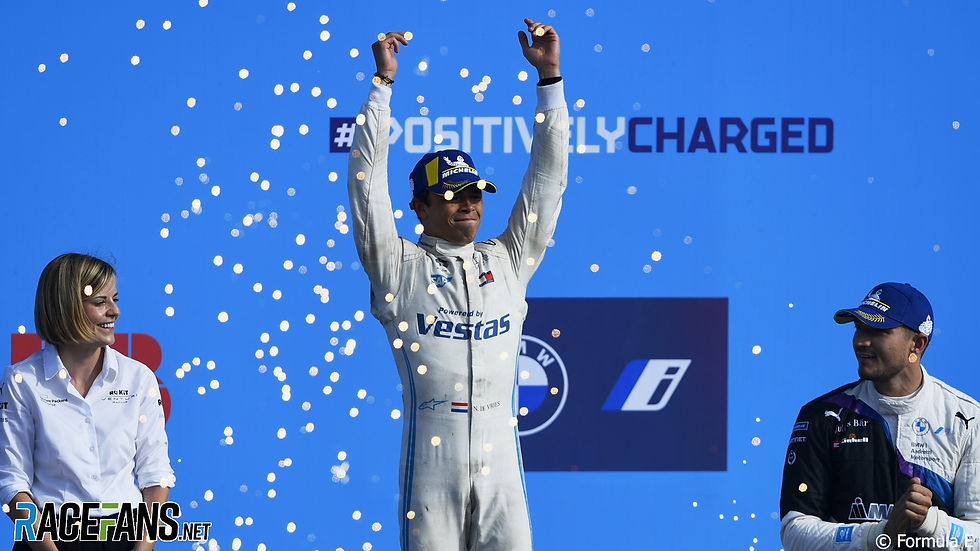
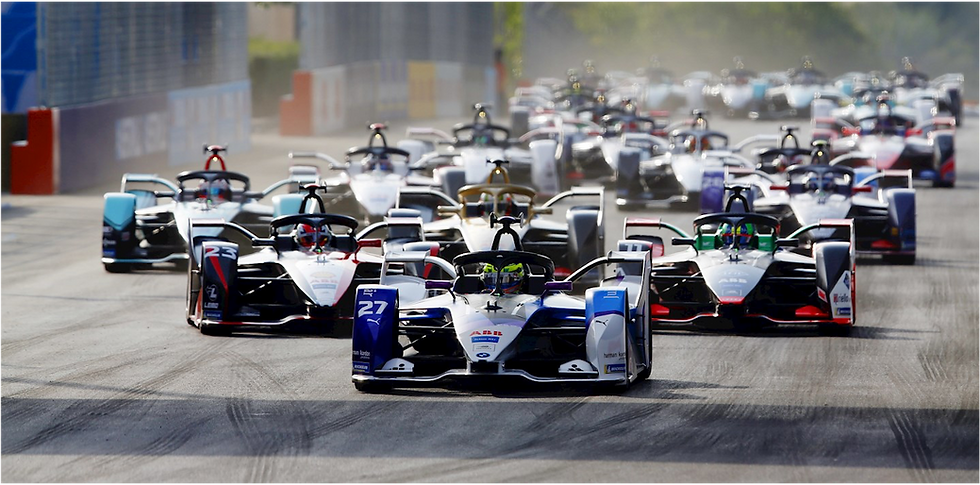
We’ll start by giving a bit of history behind the motorsport series. In 2012, the FIA announced the single seater championship, hosting only electric cars, and so Formula E was born. The first season began in 2014 and has been going strong ever since. 2019 saw the league gain world championship status, something that would eventually take place in the 2020/21 season. Nyck de Vries became the very first Formula E World Champion, with Mercedes-EQ taking the team's title.
As of September 2020, Formula E became the first (and only) global sport to reach net-zero carbon emissions since its inception.
How Does It Work?
Formula E is very similar to other motorsports leagues, with your classic format of practice sessions, qualifying and races, however it does have its differences.
The league runs at racetracks all across the world, but makes a point to only travel to cities that are actively trying to fight climate change such as London, New York and even Monaco!
Unlike other series, all Formula E action takes place on one day, with two practice sessions, a qualifying session and the race. During a double header (where two events are held over the course of two days), only one practice session is allowed on the second day.
A session is also held on the Friday before a race weekend, where the cars run at a reduced speed to check the reliability of the car and also the electronic systems.
The top 10 finishers in the race receive points, with one point being awarded for fastest lap in the race, a point for fastest lap in qualifying and three points for the driver who takes pole position.
Attack mode can be used by driving over the activation areas, which gives the racers extra power for an allocated time which varies from each race track.
Fanboost offers a way for the fans to get involved, by voting for their favourite drivers. The top 5 drivers with the most votes also get a certain amount of extra power, which they can use at any time.
For our full guide on Formula E, click here!
Well, What’s Changed?
3 key changes have been made for Season 8 by the FIA, starting next year in January. They are introducing a new qualifying format, new tracks as well as new rules and regulations.
New Qualifying format
The first sees the qualifying format changed from the old, which should make it both easier and more exciting for fans to watch and understand.
The old format saw drivers split into different groups based on championship position, with the fastest 6 drivers partaking in a ‘Super Pole Shootout.’
With the new format, however, picture it as a football World Cup type of scenario.

Two groups of 11 drivers (ordered based on their championship position) race to set fastest times, with 220kW of power allowed. The fastest 4 drivers from each group then battle it out with 250kW in quarter finals and semi-finals before the final, with the overall winner taking pole position. The runner up takes P2, the other semi-finalists P3 and P4, and the quarter finalists P5 through P8.
The rest of the drivers from the pole winner’s group line up in the odd numbered starting positions on the grid, and the other group in the even numbered starting positions, similar to IndyCar.
This makes the qualifying format a lot easier to understand! With a sport that’s already so close in terms of racing, this should make it even closer going into each race weekend, not knowing who will take pole position.
New racetracks
Formula E is set to race in brand new cities next season, with the additions including Seoul, Jakarta and Vancouver. Check out the provisional calendar below:

Double headers will be taking place in Saudi Arabia (Diriyah), America (New York City), Great Britain (London) and South Korea (Seoul).
With on-going Covid-19 pandemic, the calendar is subject to change, however, hopefully there won’t be too many disruptions as it looks to be the best yet!
New rules and regulations
A standard race or ‘E-Prix’ lasts 45 minutes plus 1 lap, meaning the drivers must finish the lap that the lead car is on, and then another.
The impact that Safety Cars and yellow flags can have on a race is well known - adding extra time onto a race whilst debris, and sometimes cars, must be retrieved before the track is safe to race on again.
Therefore, a maximum of 10 minutes has been added to races, where the Safety Car or yellow flags may impact the E-Prix, giving longer for the hazard to be fixed and not impacting the race.
The power outage of the cars has increased from season 7 as well. During races, 220kW will be used compared to 200kW from last season, and 250kW during attack mode, up from 235kW.
Verdict
These updates seem to have Formula E’s best interests at heart. Alberto Longo (Chief Championship Officer and Co-Founder of Formula E) has called the new qualifying format “intuitive, unpredictable and entertaining” for fans. Season 8 has the potential to be the biggest yet, by being the most exhilarating, and could bring a whole lot more fans into the league, as well as keeping its zero-carbon footprint status.
Great racing that’s good for the environment? What more could a motorsport fan want!


Comments