


Your Guide To Sprint Qualifying

Back in April, F1 announced that sprint qualifying would be introduced at three races on the calendar. The British GP and the race at Monza have been confirmed as 2 of the hosts, with the third track still unconfirmed. With the first sprint qualifying happening this weekend at the British GP, we thought we would give you a guide to what it is and how it affects the race weekend

What Even Is Sprint Qualifying?
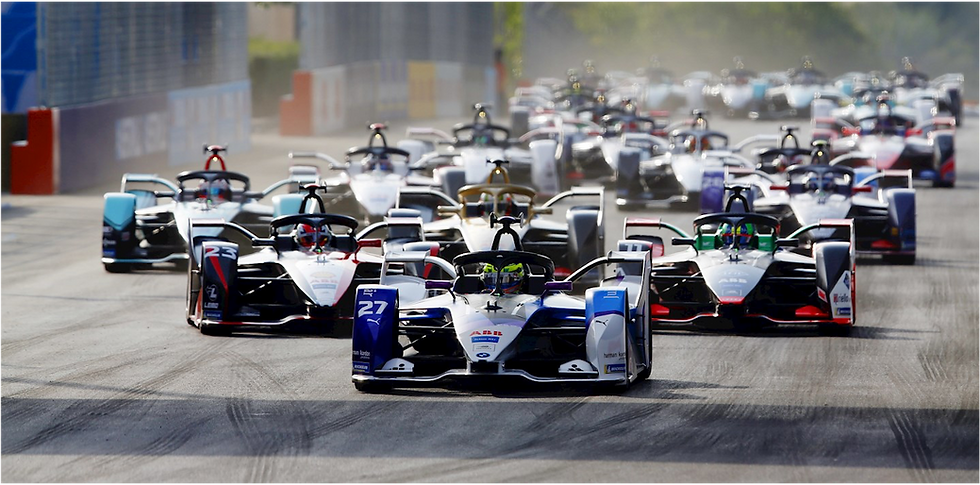
Sprint qualifying is effectively a short race to determine the starting grid for the Sunday race. The race is 100km long (about a third of a usual race), with the number of laps being the least that exceed this 100km limit. For example at Silverstone (a 5.901km track), there will be 17 laps, which covers 100.317 km. Pit stops are not compulsory therefore the sprints are expected to last 25-30 minutes.
There are points available for the race! P1 will receive 3 points, P2 will get 2 points, and 1 point will be awarded to P3.
How Will The Race Weekend Look?
So first practice will go ahead as usual on the Friday morning, however, on the Friday evening, there will be a qualifying session. This is set up in the usual fashion of Q1, Q2 and Q3 but instead of setting the grid for the Sunday race, this will set the grid for the Sprint. On Saturday morning there will another practice session before the sprint race happens in the afternoon. The results of the race will then set the grid for the Sunday race, so whoever wins the Sprint will start on pole. For illustration, here are the Silverstone timings:
Friday: Practice 1 14:30
Quali 18:00
Saturday: Practice 2 12:00
Sprint 16:30
Sunday: Race 15:00
What Do The Teams Think?
There have been some mixed responses in the paddock. Some are very excited about the extra action, others are less keen on it, such as Sebastian Vettel who is sceptical about adding another 'race' into the weekend with Hamilton arguing that it is just 'going to be a train' with little overtaking. Many understand that it is part of the plan to make the race weekend more of an event, with Norris commenting that it will attract a younger audience, but everyone will be waiting to see how it plays out when it goes ahead for the first time this weekend!
Originally, the idea of a reverse grid was proposed, as used in other Formula racing, however, this was quickly squashed by many of the teams. This is where the top half of the grid at the end of the sprint race is flipped for the Sunday race, so whoever finished P10 would then start on pole. With this comes the argument that teams have no incentive to perform well in the sprint as there are few points available compared to the advantage of finishing halfway down the rankings and then being boosted up the grid on Sunday.
The teams also ensured that there is extra budget available due to the extra risk involved with effectively adding another race onto the weekend. Teams can spend an additional $500,000 to cover the three races and there is a mechanism in place for claims to be made were there to be accident damage.
The Rules and Regulations
Due to the change in the weekend, some of the tyre and car regulations are slightly different.

In regards to tyres, the teams will have 12 sets available to them. On the Friday, two sets are available for FP1 and 5 sets of soft available for qualifying; teams have to qualify on the soft tyre. On the Saturday, one set is available for FP2, with 2 sets available for sprint qualifying; teams have free choice of tyre for the sprint. The two remaining sets will be available for the Sunday Grand Prix. If qualifying or FP1 is held in wet conditions, each team will be given another set of intermediates, however, a set of intermediates must be returned before the sprint. If sprint qualifying is in wet conditions, each team is allowed to swap a set of used intermediates or wets for new intermediate ones. In total, there are three sets of wet and four sets of intermediates available to each team at the start of the event.
After the sprint qualifying, the cars will be in full Parc Ferme conditions. This means that the car can not be touched by anyone without express permission from the FIA. This is to avoid teams developing cars just for qualifying, which then can then change and re-set up for the main Sunday race. The teams can do some reconfiguration before FP2 on Saturday. Allowances have also been made for brake friction material and for power units and gearbox cooling adjustments if there is a significant temperature change. Teams can also use previously used front wings without penalty if theirs is damaged during the sprint. Furthermore, Article 10.3 of the Technical Regulations permits for changes or adjustments to the suspension elements and to alter camber, toe or ride height of the suspension components between qualifying and sprint qualifying.
It's definitely going to be interesting to see how the sprint race plays out this weekend!


Comments